NOSTALGIA FOR FUTURE ENCOUNTERS
[Curator ANDREEA FOANENE vs DAN VOINEA]
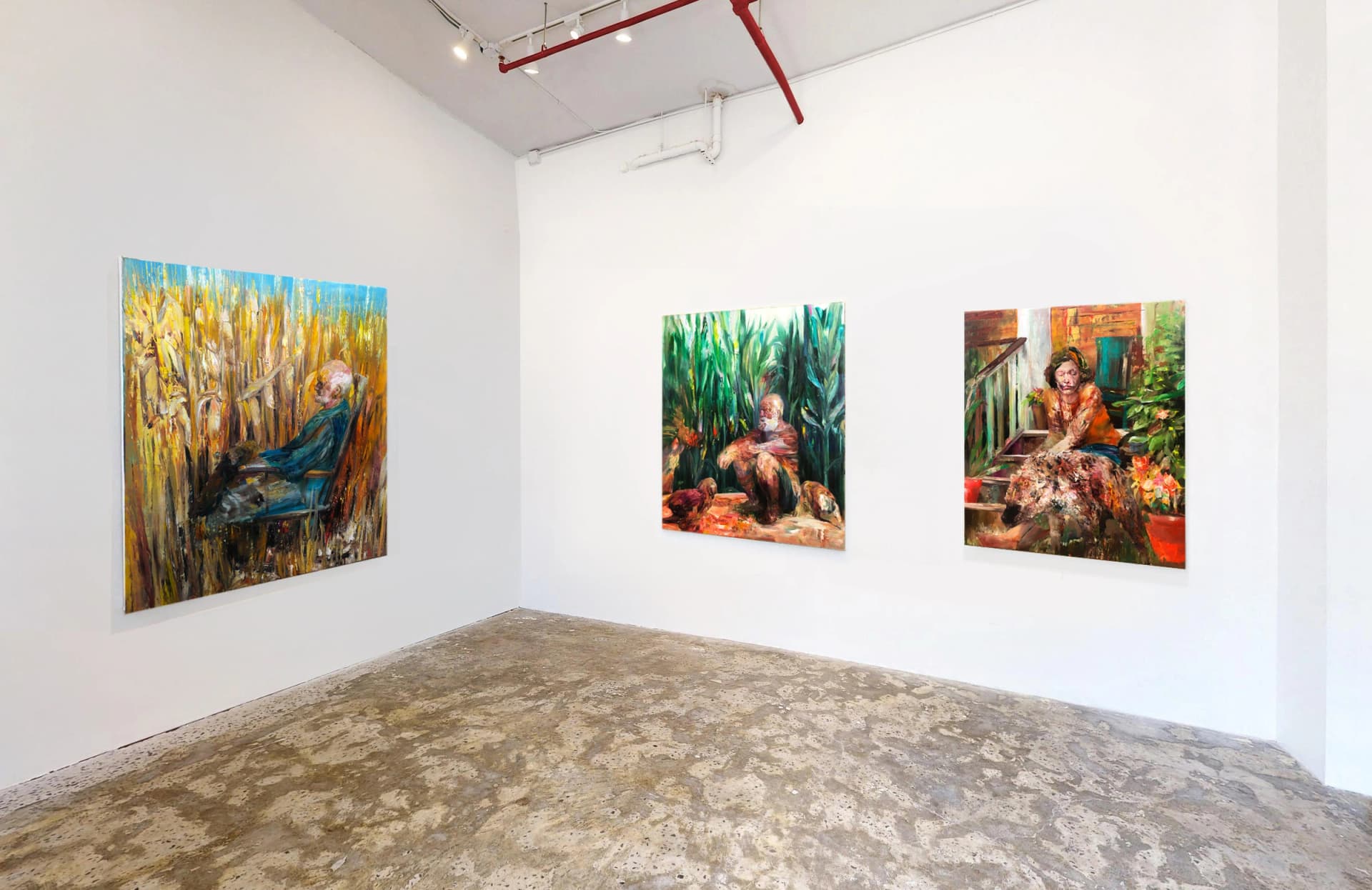
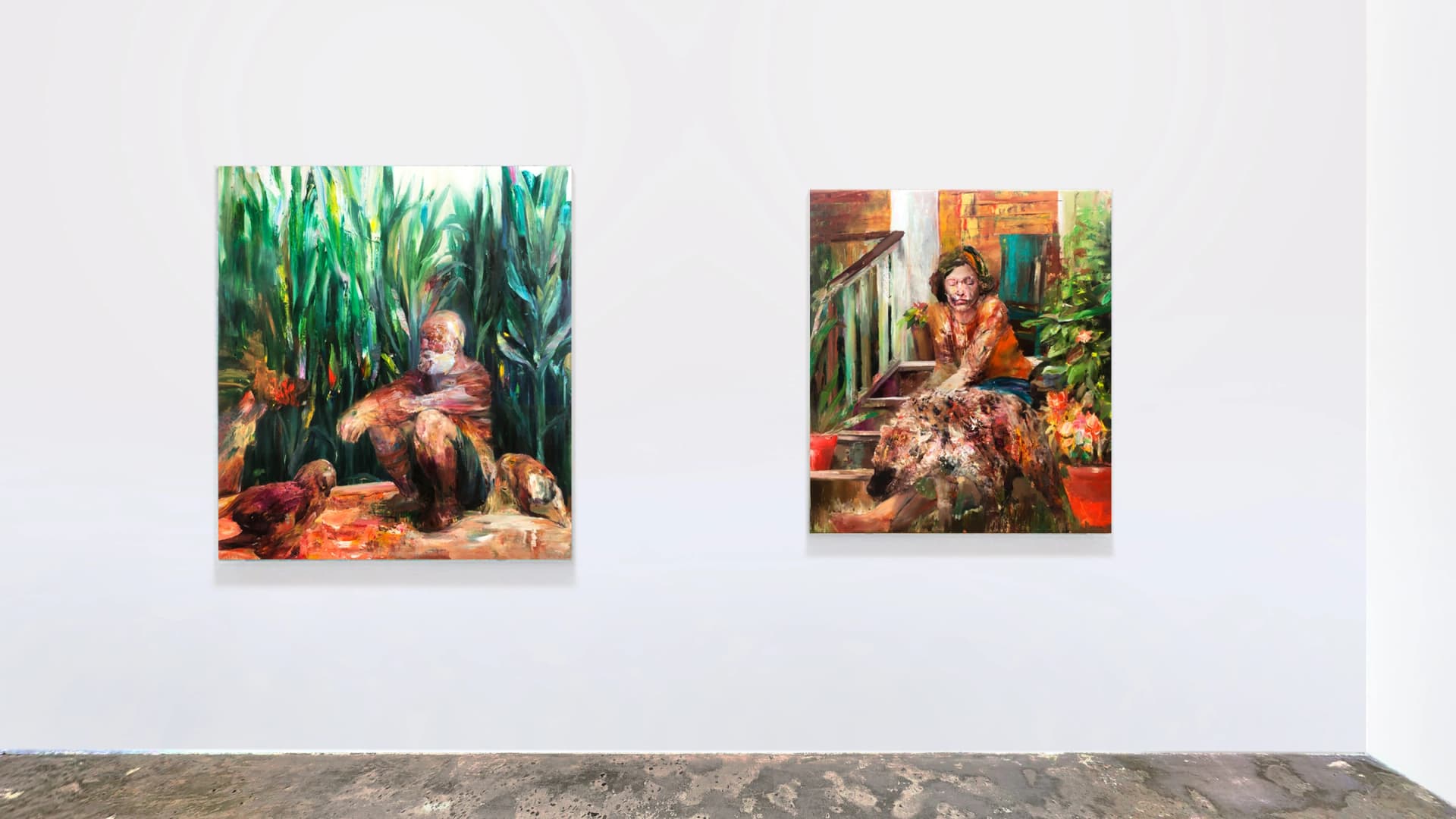
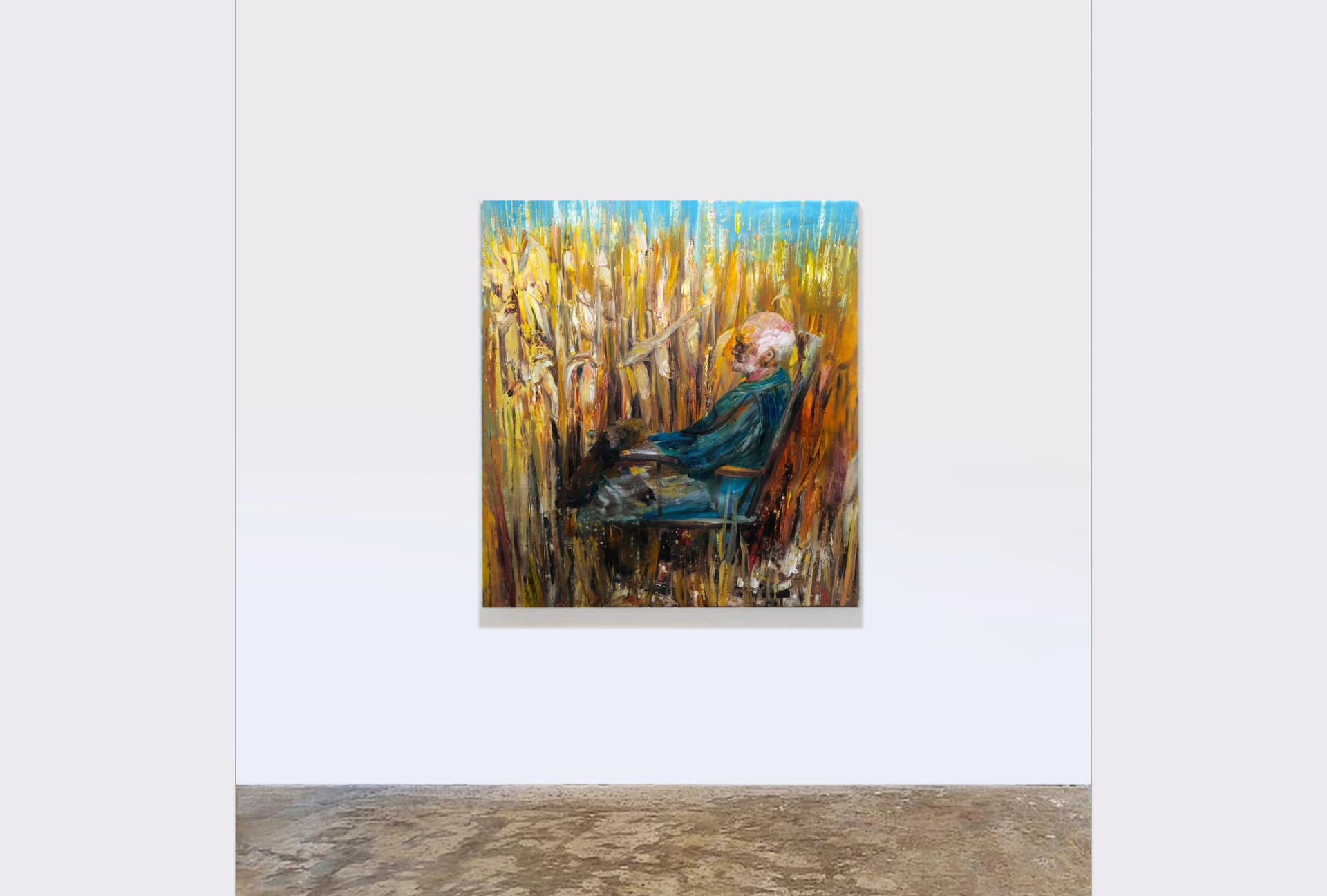
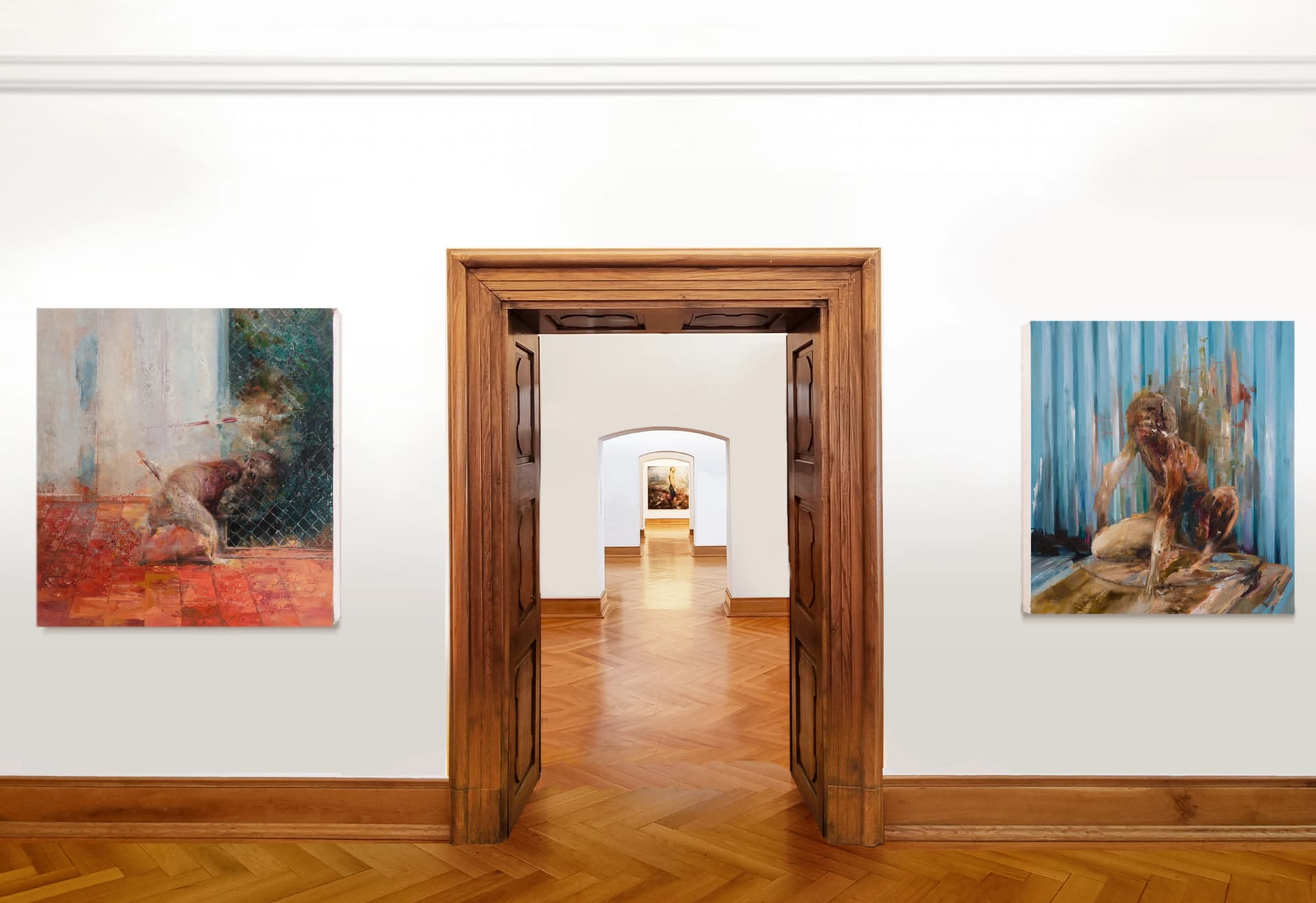
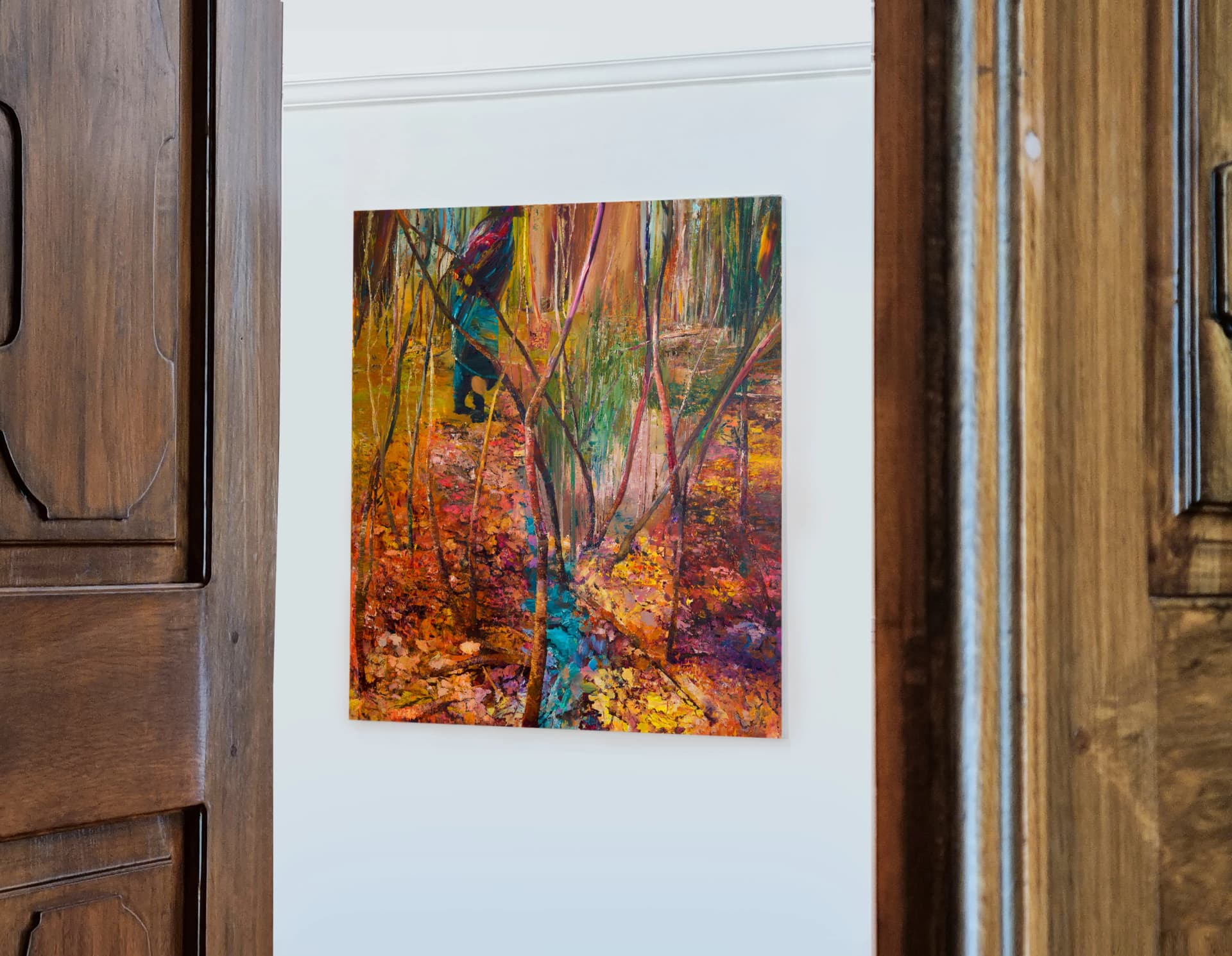
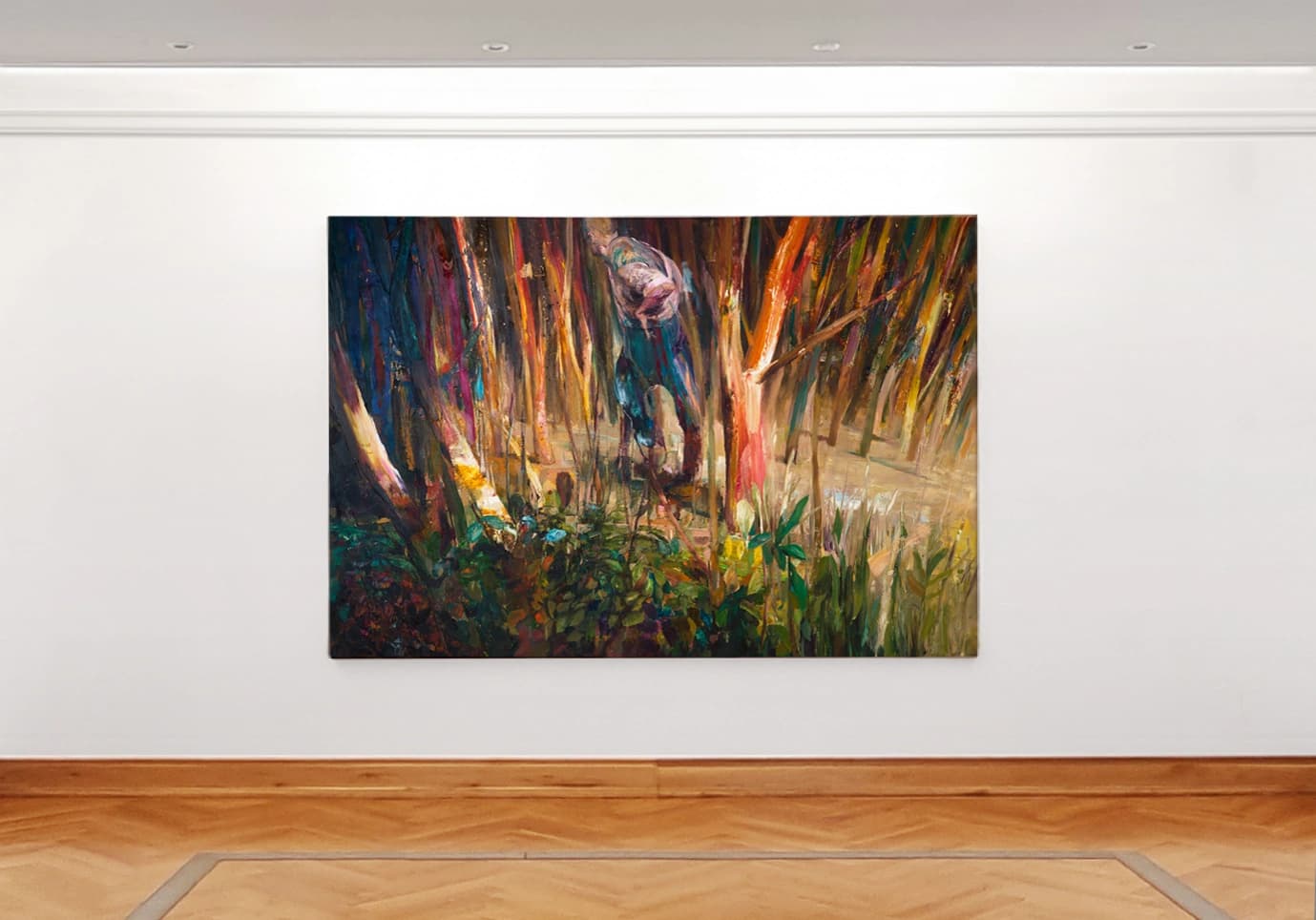
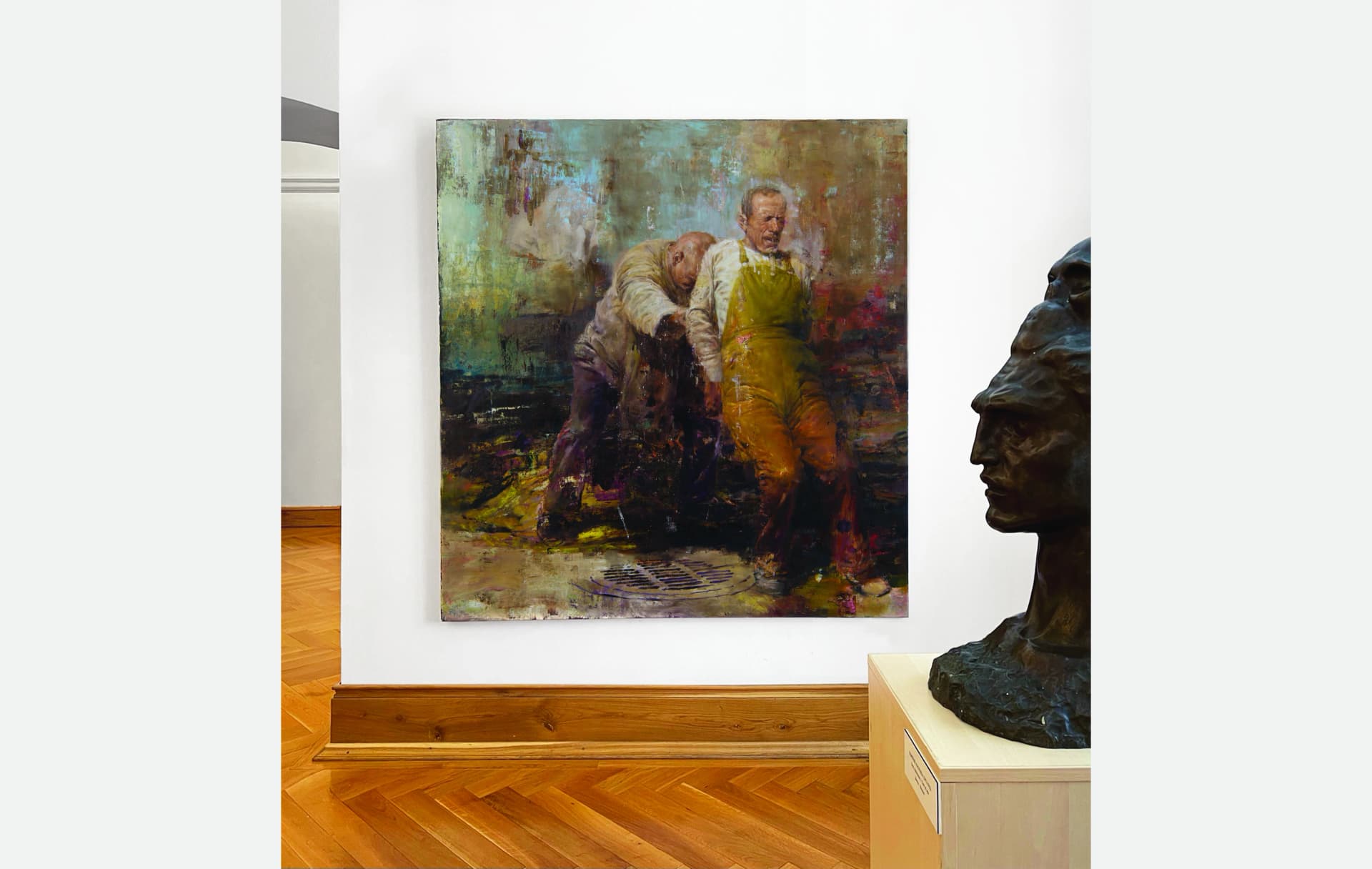
AF: For the past ten years, you have been exclusively active on the international art scene and, most likely, there has been a motivation behind this approach. Could you share it with us? DV: I am frequently asked why I no longer exhibit my works in the country – one could say that I have been waiting for a decade, just because it sounds more jubilant. The truth is that ever since I started collaborating with Slag, the option of the spaces where I would exhibit has entirely been the choice of the gallery. Therefore, the decision made when I shook hands with Irina Protopopescu was the minimum provision required in order to work à bout de souffle. As I am rather practical and have no other gift than painting, I was happy to carry on painting in the workshop with no interferences – someone else started to look after the art market. However, in order to make this collaboration viable, it became more feasible for it to take place abroad – let us not forget that the gallery is from New York. In other words, the strategy of my visibility has not been a choice of the moment, it has taken shape in time, in a natural way. AF: After all these years abroad, you return home with an exhibition in Timisoara. Could we draw a parallel with The Myth of the Eternal Return? DV: I have been waiting for so long to have a show in Romania, especially in the recent years. Yet, a few projects abroad sustained me for a while. It may have well been due to self-imposed requirements. Not only does the workshop count for the place where you work, but it is also a shelter you feel safe to dwell in, a place you can allow yourself to be hesitant and uncertain, far from any external interferences. The supreme reference one relates to is abstract. What about “unseen” witnesses, friends and colleagues, collectors and art critics, all those imaginary voices that can lay an influence on you and cannot possibly be silenced as you wish? For me, this phenomenon has an axiomatic value: I keep in mind all the people I no longer have time to meet. They become my vivid, imaginary companions. But I really have no reason to complain, they are all from home. I owe them the charm and nostalgia of formative encounters, they are more sensitive than the people abroad (where I have, however, developed fair and impeccable relationships), and have a certain intellectual-human depth. Meeting the audiences worldwide reinforces your responsibility, but when you see your own folks, especially after all these years, your talents are scrutinized, what you have achieved is evaluated on the initial criteria. There is no use bragging about accomplishments. That is why the joy is somehow shadowed by anxiety: in Symbiosis, I do not only meet the still and quiet masters of Romanian art, but also this animated and vocal world of “magisters”, as I like to call my special guests, friends from whom I keep learning from, who can or may not validate me. AF: You said that Symbiosis is dedicated to the memory of your father, which makes this exhibition even more special. What is the basic life lesson you received from your father and, at the same time, what is the legacy of painting laid down by the masters? DV: As one of my close friends suggested, I was about to add “In the Name of the Father” to the title of this exhibition. The circumstances were rather unfavorable, so I am thrilled to mention this now. My father taught me the importance of one’s duty, of keeping a promise, of the responsibility you take when you get involved with something or someone, no matter what or whom. And I do feel remorse when I admit to being indolent. My father’s ethical self-discipline was a priceless lesson. From modern artists I have learnt the lesson of determination – almost all of them were born under the sign of consistency, no matter the standards of living they had to meet back in those days. Some of them even ended tragically — like Andreescu and Luchian, who were both wrecked by terrible illnesses. At times, because of the involuntary association with the hero figure and their masterpieces, I had to take some time to replace their effigies as true patriots with the more subtle portraits of artists. It was only much later that I tried to make up for the lesson of the ego. AF: Painting is an assemblance which puts in the fragile equation of ideas, emotions, forms, and obsessions. Where are you heading to and what is it that you look for in your works? DV: It seems to me presumptuous to claim that I know exactly what I am looking for. Anyone who says so may well be devoured by self-sufficiency. What I look for is always subject to change, it simply cannot be described in a relevant or definitive manner. It seems more sensible to claim that painting, and maybe the artist’s endeavor in general, is a way towards rather than setting an “objective”. As a child, if I happened to wander on a countryside field at sunset, I always ran as while watching the moon, just to imagine standing still. It felt like I was in a dream. This is what I am feeling right now: what I am looking for seems to be in front of my eyes, I am going towards it, and it keeps going with me in the same direction. I cannot say whether I am going forward or not. At the end of the day, I admit to having accomplished a certain “journey”, as long as we are referring to the stages I have reached so far. In 2014, when my palette was limited, I congratulated myself on the sober tones, with only a few colors, to which I added a handful of dark browns and that was it. Now, I wish I could find more nuances of pink. I can relate to the new tradition of visual arts when the “exhibition project”, rather than the “painting” counts: you get committed to an idea with the whole of your heart and, all of a sudden, you find meaning and force. However, the term “project” makes me rather restless, I am caught on the wrong foot and see myself forced to perform a mere technical transformation of a certain theme. Then I panic, I become moody and end up sabotaging the whole idea. I no longer recognize it, it does not suit what I am looking for, and the star I am spinning around is somewhere else. AF: One might say that the human figure is the central axis of your works. Is there a particular clue that may help us to grasp the relationship between all those human typologies in your paintings? DV: I would rather not consider my characters as human typologies. But still, if they are as such, they are abstract and have no direct correspondence in the real world. The movement, or to be more specific, the stillness I try to build around them generates - to a certain extent - the environment surrounding them. It is the baby that gives birth to the amniotic fluid. Sometimes, the determined order is reversed so that the characters are subject to the environment. Anyhow, they are neither steady starting points, nor characters of a plot. This is why their expressiveness has a relative meaning and identity. AF: A pilgrim enjoys the journey. Pilgrim, your latest series, consists of large, chromatically rich canvases worked in a substantial manner. We have talked a little about this approach, about the tactile concept, dedicated to the blind and to the visually impaired. Who are you, as an artist, in this equation — a pilgrim, a guide or perhaps someone who can see, but has a momentary lapse of vision? DV: I have never thought about my own place in such an equation. However, the older I get, the more I realize that I may not see anything as it is, or that I may miss something essential. I forgot who said that painters should have their eyes removed, possibly because this way they would be cut off for good from anything that is too obvious for human sight. In order to understand, the eyes do not always offer us sufficient help. We carry with us an irrepressible temptation to “feel” with our fingers whatever fascinates us. Yet, let us remember what we can read in any museum: “Do not touch the exhibits!”. At first, I entertained the idea of thick layer paste, as a means of knowledge for the blind, but later I considered it to be a cheap trick, so I gave up on it. The paste treatment I applied had not been planned in advance, it became the only choice I had. The detail will always demand extra attention, an extra layer of paste you keep loading, you add brightness to what already shines. At times, I had to divide nuances, just like the neo- Impressionists, but with no descriptive agenda. I admire them for the way they succeeded in respect to their plein-air outings. They described the light; I merely invent it. It is anxiety. AF: Tell me about the violent, abrasive – latent dimension we find so often in your works. DV: I do work violently at times. But this is so because I truly believe that only genuine emotion leads to a genuine gesture. I can hardly tell what it looks like from the outside. After all, art is an implicit confession, isn’t it? The point is: how much you reveal from what you conceal. It is a sort of negotiation if you like. When I want to do something and I reach a certain level, I get an impetus I can hardly resist. I am not talking about the state of “grace”, or anything you do easily under inspiration, or the miraculous moments when you “see” and feel free to express yourself. I am talking about a tension seeking to be released when the glass is full and it overflows. This is when I become passionate, splash, hit, and break the paintbrush in two! This is when I break free, show off and crow like a rooster! At last, the violence I inflicted upon the canvas pays off and brings me to a state of exhaustion, cools me and makes me, once again, a lucid human being. I may not have got what I wanted, but a new road is unfolding before my eyes. Should I change what I just accomplished or should I keep going on the same way? Only when the work is finished do I get a clear image of what really happened. Was I inspired or did I fail big? My self-evaluation is symptomatic: it seems I always tend to appreciate more whatever looks strange to me. AF: In your works, there are recurrent fragments of nature and, in the most recent ones, nature almost becomes a landmark. Can you tell us why that is? DV: I have recently appealed to nature and landscape with no intention to resuscitate the genre. I merely wanted to approach my own anxieties from another perspective, the unsettling infusion of the unnatural, of the unfamiliar. It has also been the proper excuse for me to get away from the formal environment of the compositions that invariably sent me to descriptions. The meaning was threatened by the void. I have an almost pathological fright about the lack of diversity in the created image, and repetition is its essence. Everything seemed unsatisfactory to me, I felt I had to move forward. One morning in March, I was cycling to reach the dell on the shore of the Danube. It was a strange experience; I did not recognize anything from what I once had known. During the winter, nature had worked diligently and perversely against itself. The trees were spinning in the air just to stick themselves back into the ground, their branches were simultaneously leaving from two or three trunks, the sand had stiffened the ground with a layer of cement. An unfriendly network of cables would not let me pass. The forest resentfully sent me back to the world I had come from. There was nothing else to see. When I got to my workplace, I had calmed down. Then I let the leaves fall on the mirror cracks, as the branches were searching for my cornea, and the trees were filling all the space around me. I felt claustrophobic. As a painter, I admit that I had been outside, in the middle of nature; as an artist I had just come from a journey within. AF: Does the projection of a certain exhibition space influence the workshop logics? Is there a relationship between the two? DV: When I paint I never think about the place where I am going to exhibit my works. Besides, a great deal of canvases are finished before the space is agreed upon. Symbiosis is different in this respect because of the special management of this project. My hosts have generously offered me the two halls linking Baba’s collection to the “Moderns”. I imagined the museum as the surface of a perfectly still and sleeping lake I was about to trouble with a noisy jump. The two halls proved to be an ideal epicenter for the shockwave. The impact was supposed to be harsh and the silence of the place was meant to be broken. The purpose was to create a chromatic burst and some sort of vividness. Chaos and damage were out of the question. Once it got to Baba’s collection and to the halls of “the Moderns”, the ripple I had imagined was to gradually fade away in larger and larger ripples until it became one with the lake. Peace had been restored. It was the right time for me to embark on the symbiosis. AF: Corneliu Baba. What does he mean to you? DV: I first encountered the formal expressiveness of his works in the early 1990’s, when I got admitted to the Arts Academy. I came across him while leafing through a thick album of oils and sketches, in sepia and coal. Most of them were self-portraits. I was amazed at their force and precision. I distinctly remember how the light violently ornated the characters, as well as the subtleties in the background. On the second encounter I began to reflect on Baba’s tragic and timeless nature. For Symbiosis, I resumed working on three of my studies that I had developed into canvases back in 2013-2014. I deliberately used the treatment I had found in Baba’s works in the early 1990’s. I painted them filled with the same emotion I had experienced when I first discovered them. I only used the reproductions of his works my subjective memory has treasured all these years. It was the reverence I felt I owed the great master. I joyfully worked on them, just like an iconographer using his creativity within the established canon. I was happy with what I had achieved but once I got to the museum, in the middle of the master’s works, I started to regret I had not allowed myself to dare more. Much more. And better. AF: Nicolae Tăttărescu, Ion Andreescu, Nicolae Grigorescu. DV: I have been surrounded by them all ever since I was a child. I used to copy Tăttărescu as I tried to do a graphite portrait of Bălcescu I had found in a history handbook. I discovered Andreescu’s “Forests” when I became a stamp collector, and the reproduction “Among Hills and Dells” was hanging in a frame above the sofa in the living room. They have all gently grown up with me, like some sort of living companions, without the majestic dignity of statues. It was only years later that I found them again in museums. Then, the reproductions I had been familiar with were challenged by the originals I saw for the first time. The other way round, that is. Now, I have set my place among them naturally with a well-tempered emotion I would have experienced had I met them at an outdoor café and asked for permission to have my picture taken with them: A snapshot, please, dear masters, three months, and that’s it! AF: How easy or difficult is it to single out the voice of an authentic artist in the context of contemporary art? DV: This could be the starting point of a difficult and massive debate, and I’m afraid this is not the best place to engage in it. Having said this, I feel tempted to come up with yet another issue: “updating” the artists who are not necessarily contemporary. Before any answer, however expeditious it may be, I would rather make abstract my identity as an artist. So, from my perspective, the “authentic” contemporary artist is fairly easy to spot. Such an artist has a distinct personality which rises above the context, lives irrespective of waves and movements, has substance, is scrutinized, and continues to surprise. Let me put it this way: “authentic” does not only mean “original”, it also involves worth, since whatever he or she produces (as far as aesthetics and ideas are concerned) does have a quantifiable content. At their best, such artists are “visionary”, trendsetters. I was saying it is relatively simple because, on the one hand we have “consecrated” artists, whose value surpasses any challenge. On the other hand, we have artists who are only susceptible to such a title because their value is still being weighed and the dynamics of their reception is unstable. And here is where the intriguing problem of visibility arises; you no longer know whether you are operating with your own tastes or if you are just parroting the curatorial-editorial promotion. You have become a snob without even knowing it. Let us look for a while on the artists who, despite not being our contemporaries, amaze us with their relevance. I am referring to the patrimony artists, whose value has been validated in time and who are now promoted by the museums alone. Their presence no longer challenges us, now it falls on us to challenge. For professionals, the admiration aroused by such artists counts for the daily amount of relevance they positively take from it; I like it and it inspires me. It also depends on how we manage our own journey in the world of art. “Landmark artists” cannot (and should not) be ignored. Sometimes it is worth getting close to them, other times it is best to keep ones’ distance. Their flame is too vivid, that is why the dynamics of admiration must be wisely tempered. Its rhythm depends on personal sensitivity and evolution, on the natural process of growing up. Almost everything is threatened by relativity — today you absolutely love something, tomorrow you get second thoughts and feel you were wrong. Some live on a determinate period, others just survive. And I believe that the latter ones are truly alive and “authentic”. But if you ask me, the answer is a line by a fictional character; the novelist from Godard’s first movie, who replies to a journalist who asked him what he wanted the most in life. The novelist looks straight to the camera and declares without blinking an eye: “To become immortal, and then to die”.